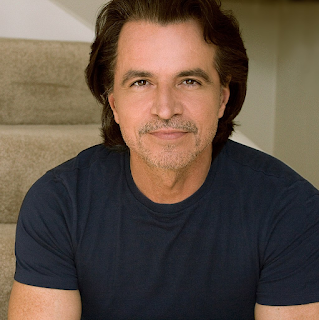
Yiannis Chryssomallis; born November 14, 1954), known professionally as Yanni, is a Greek-American composer, keyboardist, pianist, and music producer. Yanni continues to use the musical shorthand that he developed as a child, blending jazz, classical, soft rock, and world music to create predominantly instrumental works. Although this genre of music was not well suited for commercial pop radio and music television, Yanni received international recognition by producing concerts at historic monuments and by producing videos that were broadcast on public television. His breakthrough concert, Live at the Acropolis, yielded the second best-selling music concert video of all time. Additional historic sites for Yanni's concerts have included India's Taj Mahal, China's Forbidden City, the United Arab Emirates' Burj Khalifa, Russia's Kremlin, Puerto Rico's El Morro castle, Lebanon's ancient city of Byblos, Tunisia's Roman Theatre of Carthage, India's Laxmi Vilas Palace, the Egyptian pyramids and Great Sphinx of Giza, and the Amman Citadel.
Saturday, December 25, 2021
Richard Clayderman
Richard Clayderman (Philippe Pagès French pronunciation, born 28 December 1953 in Paris) is a French pianist who has released numerous albums including the compositions of Paul de Senneville, Olivier Toussaint and Marc Minier, instrumental renditions of popular music, rearrangements of movie soundtracks, ethnic music, and easy-listening arrangements of popular works of classical music.
Francis Goya
Francis Goya (born François Edouard Weyer; 16 May 1946) is a Belgian classical guitar player and producer. He has recorded fifty albums, many of which have reached gold or platinum status. Francis went solo in 1975, changing his name to Goya. His first solo single, Nostalgia, became an international hit, reaching the top ten in Belgium and the Netherlands.
Gheorghe Zamfir
Gheorghe Zamfir (born April 6, 1941) is a Romanian nai (pan flute) musician. Zamfir is known for playing an expanded version of normally 20-pipe nai, with 22, 25, 28 or even 30 pipes, to increase its range, and obtaining as many as eight overtones (additional to the fundamental tone) from each pipe by changing his embouchure. He is known as "The Master of the Pan Flute".
James Last
James Last (born Hans Last; 17 April 1929 - 9 June 2015), also known as Hansi, was a German composer and big band leader of the James Last Orchestra. Initially a jazz bassist (Last won the award for "best bassist" in Germany in each of the years 1950 - 1952, his trademark "happy music" made his numerous albums best-sellers in Germany and the United Kingdom, with 65 of his albums reaching the charts in the UK alone. His composition "Happy Heart" became an international success in interpretations by Andy Williams and Petula Clark.
Raymond Lefèvre
Raymond Lefèvre (20 November 1929 - 27 June 2008) was a French easy listening orchestra leader, arranger and composer. Born in Calais, France on November 20, 1929, LeFevre studied flute as a child and at 16 entered Paris' Conservatoire National de Musique, moonlighting as a jazz pianist in local clubs and cabarets. After a stint behind jazz bandleader Hubert Rostaing, LeFevre joined conductor Bernard Hilda's Club des Champs-Elysées orchestra.
Paul Mauriat
Paul Julien André Mauriat; 4 March 1925 - 3 November 2006) was a French orchestra leader, conductor of Le Grand Orchestre de Paul Mauriat, who specialized in the easy listening genre. He is best known in the United States for his million-selling remake of André Popp's "Love is Blue", which was number 1 for 5 weeks in 1968. Other recordings for which he is known include "El Bimbo", "Toccata", "Love in Every Room/Même si tu revenais", and "Penelope". He co-wrote the song Chariot (also known as I Will Follow Him) with Franck Pourcel from Belgium. Pourcel (using the pseudonym J.W. Stole) and Mauriat (using the pseudonym Del Roma).
Franck Pourcel
Percy Faith
Percy Faith (April 7, 1908 - February 9, 1976) was a Canadian-American bandleader, orchestrator, composer and conductor, known for his lush arrangements of pop and Christmas standards. He is often credited with popularizing the "easy listening" or "mood music" format. He became a staple of American popular music in the 1950s and continued well into the 1960s. Though his professional orchestra-leading career began at the height of the Swing Era, he refined and rethought orchestration techniques, including use of large string sections, to soften and fill out the brass-dominated popular music of the 1940s.


